Entry · Ref 8RXFZ99G
Why Structural Drying Matters for Mold Prevention
- Posted
- 2026-11-13
- Last amended
- 2026-11-13
- Account
- @underfootliving
When a home or business experiences water damage, the visible signs often get the most attention. Standing water is pumped out, wet carpet is pulled up, and surfaces are wiped down. But the real problem often hides beneath the surface. Moisture that soaks into baseboards, subflooring, wall cavities, and structural wood does not dry out on its own. That trapped moisture is what feeds mold growth, sometimes for months after the space looks dry. Removing the contaminated carpet is only the first step. The lasting solution lies in structural drying, a process that targets moisture where it actually hides.
What Is Structural Drying
Structural drying is a methodical approach to removing moisture from the building materials that make up a structure. Unlike surface drying, which deals with visible water on floors and walls, structural drying addresses the water that has soaked into porous materials. Wood studs, plywood subfloors, drywall, and insulation can all absorb significant amounts of water during a flood, leak, or sewage backup. If that moisture is not fully extracted, it creates an environment where mold spores can germinate and spread.
The process typically involves a combination of high-velocity air movers, industrial dehumidifiers, and sometimes heat. Air movers push dry air across wet surfaces, while dehumidifiers pull moisture out of the air so it does not settle back into the materials. The goal is to lower the moisture content of the structural elements to a level where mold cannot grow, generally below 16 percent for wood and below 12 percent for drywall. This is not something that happens quickly. Depending on the severity of the water damage and the materials involved, structural drying can take several days to a week or more.
Why Surface Drying Is Not Enough
It is easy to assume that once the carpet is removed and the floor feels dry to the touch, the problem is solved. But touch is a poor gauge of moisture inside solid materials. A piece of wood can feel dry on the outside while its core remains saturated. The same is true for the padding under carpet, the tack strips, and the subfloor. If the subfloor is particle board or oriented strand board, it acts like a sponge. Once wet, it holds moisture for a long time unless actively dried.
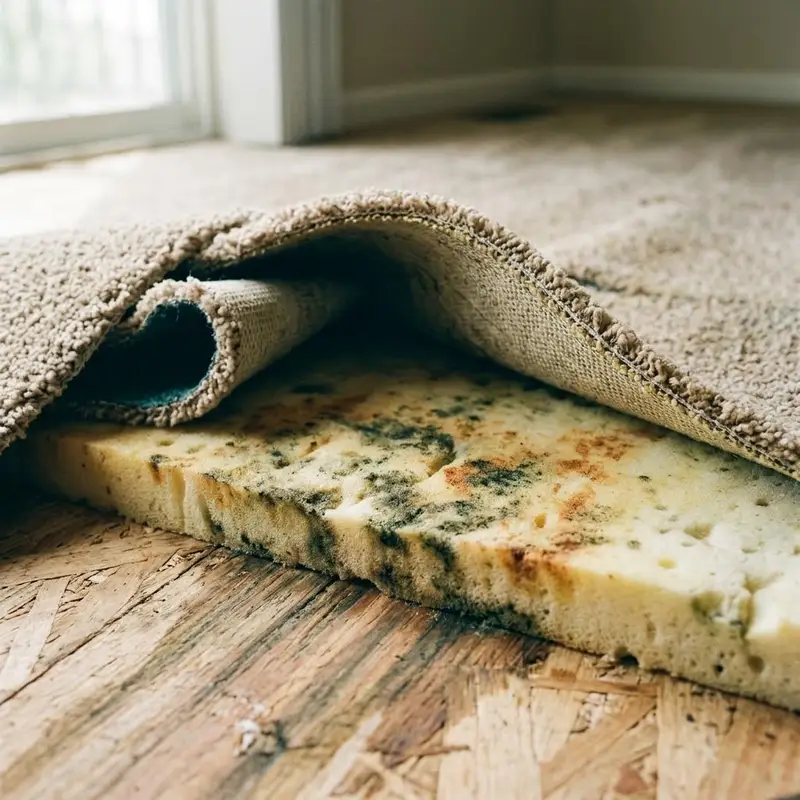
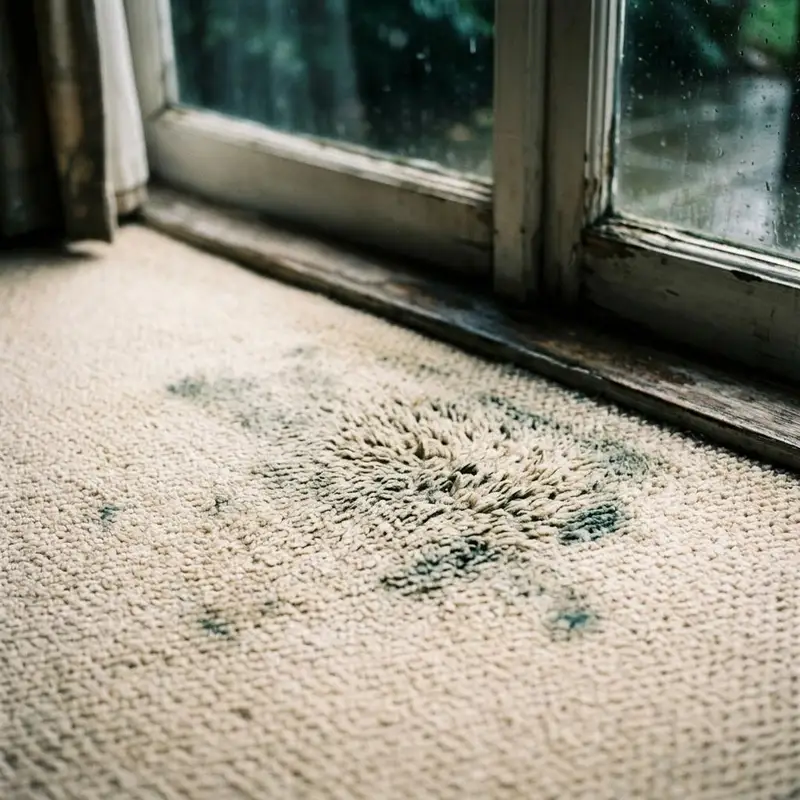
Mold does not need standing water to grow. It only needs a relative humidity above 60 percent on a surface and a food source. Carpet fibers, dust, and the organic compounds in wood and drywall all feed mold. When moisture lingers inside the structure, mold colonies can establish themselves in wall cavities, under baseboards, and in the subfloor. By the time visible mold appears on the surface, the infestation has often spread well beyond the area that was cleaned.
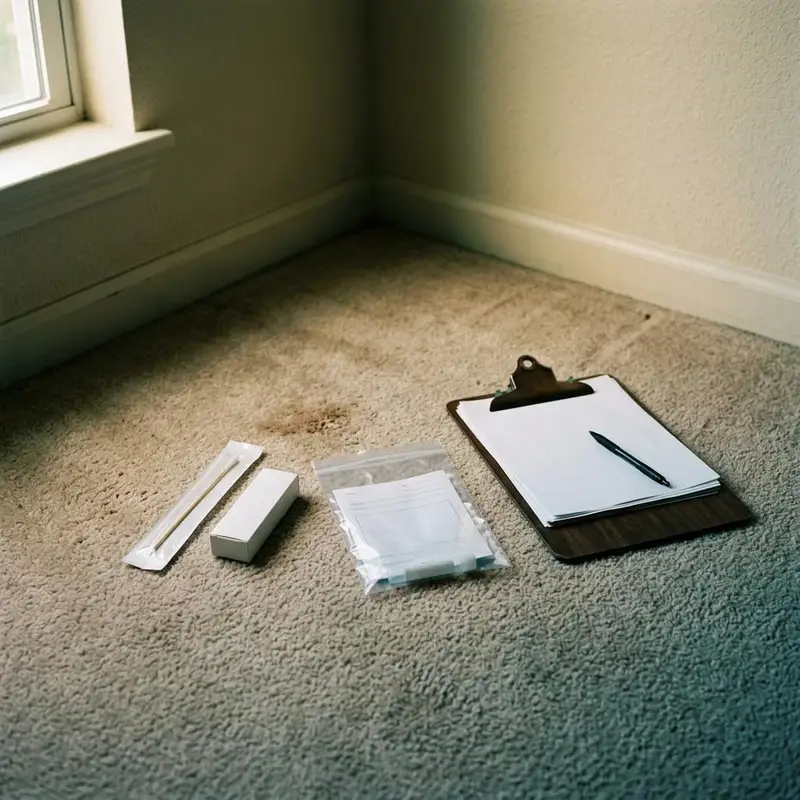
This is why professional water damage restoration includes structural drying as a core step. It is not optional. Skipping it or rushing it is one of the most common reasons mold returns after a cleanup. Carpet Mold Removal Services Pros carpet replacement services include structural drying as part of their process, ensuring that the new carpet is installed over a dry, stable subfloor.
How Structural Drying Works in Practice
A typical structural drying setup begins after standing water is removed and contaminated materials like carpet, padding, and baseboard are taken out. The restoration crew places industrial-grade dehumidifiers and air movers throughout the affected area. The air movers are positioned to create a cross breeze that reaches all wet surfaces, including the back sides of walls and the underside of subflooring. Dehumidifiers work continuously to keep the relative humidity low, which speeds evaporation.
Moisture meters are used to track progress. These meters measure the moisture content of wood and drywall at various points. A professional will take readings in multiple locations, including corners, along walls, and near the center of the room. The drying continues until all readings fall below the threshold for mold growth. This can take three to five days for a single room and longer for larger areas or multiple rooms.
Temperature also plays a role. Warmer air holds more moisture, so raising the temperature in the drying zone can help. But heat alone is not the answer. Without good air movement and dehumidification, warm air can simply redistribute moisture rather than remove it. The combination of all three elements, air movement, dehumidification, and controlled temperature, produces the best results.
What This Means for Carpet Replacement
If you are planning to replace carpet after water damage, the condition of the subfloor is critical. Installing new carpet over a damp subfloor is like putting a lid on a pot of simmering moisture. The carpet will trap the moisture underneath, and mold will grow between the subfloor and the carpet backing. Within weeks, you may notice a musty smell, discoloration, or health symptoms like coughing and headaches. The carpet replacement will have been wasted.
A thorough drying process before installation prevents that. It ensures that the new carpet goes down on a surface that is dry enough to remain free of mold for years. That is why professional restoration services, including Carpet Mold Removal Services Pros carpet replacement services, always include structural drying as part of the package. It is not an upsell or an add-on. It is a necessary step to make the replacement last.
Signs That Structural Drying May Be Needed
Not every water event requires full structural drying. A small spill that is cleaned up immediately may not soak into the subfloor. But certain situations almost always call for it:
- Flooding from a river, storm surge, or heavy rain that saturates the ground and foundation
- Sewage backups that spread contaminated water under walls and into crawl spaces
- Leaks that go unnoticed for days or weeks, allowing water to wick up drywall and into framing
- Burst pipes or appliance failures that release large volumes of water quickly
- Any situation where carpet padding and subflooring are visibly wet when the carpet is pulled up
In each case, the moisture has had time to penetrate deep into the structure. Surface drying and airing out the room will not be enough. Professional structural drying is the only reliable way to get the moisture out.
How to Tell If Drying Is Complete
It can be tempting to declare the area dry once the walls feel dry and the floor no longer looks damp. But that can be misleading. A more reliable method is to use a moisture meter. Many restoration companies will take before and after readings and provide a report. If you are working with a contractor, ask to see the moisture readings for the subfloor and the bottom of the wall studs. If they cannot provide them, the drying may not have been thorough.
Another sign is the presence of a musty smell after the area has been dry for several days. That smell is volatile organic compounds released by mold. If you smell it, mold is already growing somewhere. Even if you cannot see it, it is there. In that case, the drying process was not sufficient, and the affected materials may need to be removed and replaced again.
The Role of Professional Experience
Structural drying is not a do-it-yourself task. The equipment needed, such as LGR dehumidifiers and high-velocity fans, is not something most homeowners have. More importantly, knowing where to place the equipment and how long to run it takes experience. A professional understands the drying behavior of different materials and how to adjust the setup as conditions change. They also know how to identify hidden moisture pockets behind cabinets, under built-in shelving, or inside wall cavities.
When you hire a restoration company, you are paying for that judgment as much as for the equipment. A good company will not rush the drying phase just to get to the carpet installation. They will wait until the moisture readings are right, even if it means an extra day or two of drying. That patience pays off in a space that stays dry and mold-free.
Long-Term Benefits
Investing in structural drying has benefits beyond mold prevention. A dry structure is less likely to suffer from wood rot, corrosion of fasteners, or delamination of engineered wood products. It also means better indoor air quality, because mold spores and the chemicals they produce are not circulating through the HVAC system. For people with allergies, asthma, or other respiratory conditions, that can make a significant difference in daily comfort and health.
The cost of structural drying is modest compared to the cost of tearing out and replacing carpet, baseboards, and drywall a second time because mold returned. It is one of those preventive steps that saves money and hassle in the long run.
Final Thoughts
Structural drying is the part of water damage restoration that happens out of sight. It is not glamorous, but it is essential. Without it, the moisture that caused the original problem remains, and mold will almost certainly come back. If you are dealing with water damage and planning to replace carpet, make sure structural drying is part of the plan. It is the difference between a temporary fix and a lasting solution.